Sustainable construction begins with decisions that shape energy use for decades. Windows influence heating demand, cooling loads, daylight, indoor comfort, and operational carbon. China’s window industry offers many advanced options, from thermally broken aluminum systems to timber-aluminum frames and high-performance uPVC designs. However, attractive specifications do not guarantee sustainable results.
This introduction explores China’s top 10 windows for sustainable construction through practical performance criteria. These include U-value, solar heat gain, visible light transmission, air leakage, water resistance, acoustic control, and expected service life. Low-emissivity glass can reduce heat transfer. Warm-edge spacers may limit condensation around the glass. Recycled aluminum sounds promising, but its environmental value depends on recycled content, manufacturing energy, and future recyclability. Installation matters just as much. A poorly sealed frame can waste the benefits of excellent glazing.
The central question is how to choose windows for sustainable construction without trusting marketing language alone. Buyers should request verified test reports, product certifications, warranty terms, and installation details. They should also compare climate conditions, building orientation, local labor quality, and maintenance access. A south-facing window in a hot region may need different solar control than one in a cold northern city. No ranking is perfect. Product data can be incomplete, and real performance may vary after installation. That uncertainty deserves attention. The following selection therefore combines technical evidence, practical experience, and whole-life considerations, helping architects, developers, and homeowners make more responsible decisions. Performance on paper is only the beginning.
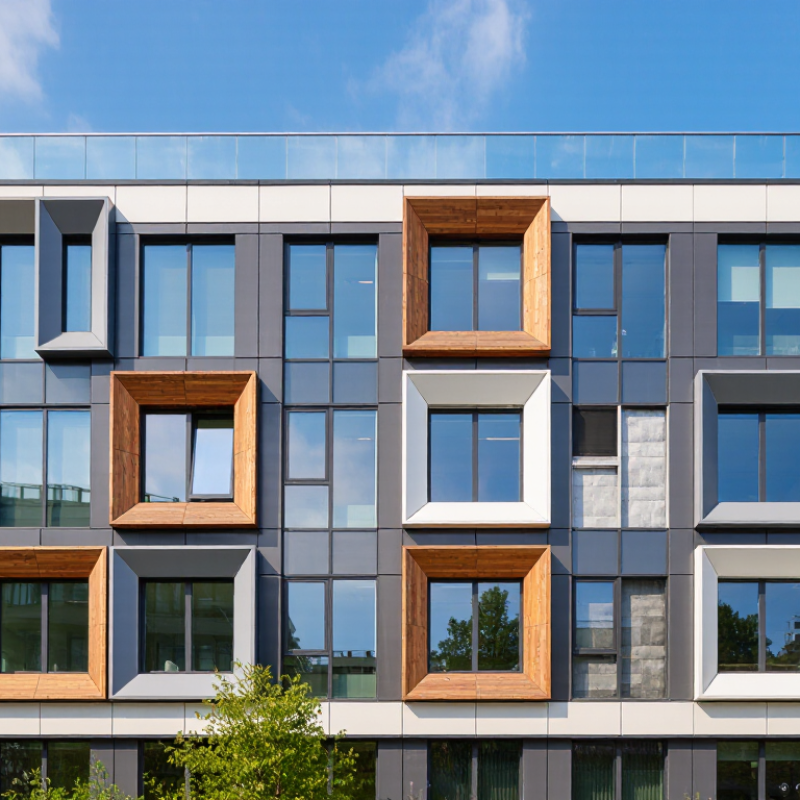
China’s sustainable window standards begin with measured performance, not marketing claims. The mandatory GB 55015-2021 code sets energy-efficiency requirements for building design and renovation. GB/T 8478-2020 also provides technical requirements for building windows and doors. In practice, buyers should compare whole-window heat-transfer coefficients, air leakage, water tightness, wind resistance, and condensation performance. Glass-only data can mislead. Frames, spacers, seals, and installation joints often decide real results.
The IEA’s 2023 Global Status Report for Buildings and Construction states that buildings consumed about 30% of global final energy in 2022 and produced approximately 26% of energy-related emissions. In China, this makes window selection important for cooling-heavy cities and heating regions alike. Low U-values help in winter, while suitable solar heat-gain control reduces summer cooling loads. Yet a highly insulated window may perform poorly if installers leave gaps around the frame. Site exposure matters too: coastal projects need stronger water and corrosion resistance, while northern projects need reliable airtightness and condensation control.
Tips: Request whole-window test reports from accredited laboratories. Check the tested size, glass configuration, frame material, and climate assumptions. Ask for installation details, not only product figures. Environmental Product Declarations can improve transparency, but they do not replace durability evidence. A recycled-content claim sounds useful, though its value depends on verified sourcing and service life. No single score fits every building, so designers should review orientation, local climate, maintenance access, and expected replacement cycles before choosing.
The chart compares the ten thermal-insulation performance grades defined by China’s GB/T 8484 standard. The values represent the upper U-value boundary for each grade in W/m²·K. A lower U-value indicates better resistance to heat transfer and generally supports lower heating and cooling demand.
Grade 1: U ≥ 5.0; Grade 2: 4.0–<5.0; Grade 3: 3.0–<4.0; Grade 4: 2.5–<3.0; Grade 5: 2.0–<2.5; Grade 6: 1.6–<2.0; Grade 7: 1.3–<1.6; Grade 8: 1.1–<1.3; Grade 9: 0.8–<1.1; Grade 10: <0.8. Final selection should also consider solar heat gain, air tightness, visible transmittance, acoustic performance, climate zone and whole-window testing.
China’s sustainable window market is moving beyond attractive frames. The strongest systems balance insulation, daylight, ventilation, durability, and installation quality. Ten useful options include thermally broken aluminum, multi-chamber uPVC, timber-aluminum composites, fiberglass, vacuum glazing, triple glazing, solar-control glazing, ventilated double skins, recycled-aluminum systems, and modular passive-house windows. Each suits different climates and building types. Coastal projects need strong corrosion resistance.
In northern cities, low U-values can reduce heating demand. In southern regions, solar control and natural ventilation may matter more. Product data should include U-value, solar heat gain coefficient, visible transmittance, air leakage, and watertightness. These figures should come from accredited laboratory testing, not sales claims. Relevant Chinese standards and project energy codes provide a useful baseline. On site, installers must check anchors, perimeter insulation, drainage paths, and sealant continuity. Small gaps matter.
Recycled aluminum can reduce material impacts, but recycling claims require traceable documentation. Durable hardware and replaceable seals extend service life. Low-emission coatings may improve comfort, yet they can reduce solar gains in cold regions. Designers should model orientation, shading, and seasonal use before choosing glass. Performance is site-dependent. A common weakness remains poor installation after excellent product selection. That mismatch wastes energy and undermines occupant comfort. More honest procurement compares whole-life carbon, maintenance access, local repair capacity, and measured performance.
China Top 10 Windows for Sustainable Construction?
Energy Efficiency and Thermal Performance Comparison
A credible top-ten window comparison should begin with thermal data, not appearance. The International Energy Agency reports that buildings consume about 30% of global final energy. Windows strongly influence heating, cooling, and indoor comfort. The U.S. Department of Energy estimates that windows cause 25% to 30% of residential heating and cooling energy use. Therefore, compare whole-window U-values, not glass-only figures. Lower U-values indicate better insulation. A practical target for cold regions is often below 1.4 W/m²·K, although climate and wall insulation change the result. Small details matter.
Solar heat gain also deserves attention. A low solar heat gain coefficient can reduce summer cooling loads, especially on south- and west-facing façades. However, excessive shading may increase winter heating demand. The International Energy Agency’s Buildings report emphasizes integrated envelope design rather than isolated product claims. Air leakage is another overlooked factor. Poor seals can create a cold draft beside a warm frame, even when laboratory glass performance looks excellent.
For China’s top-performing windows, buyers should request certified test results under relevant national or international standards. Check Uw, SHGC, visible transmittance, condensation resistance, and air leakage. Installation quality remains decisive. A 2023 Lawrence Berkeley National Laboratory review also warns that modeled savings may differ from real operation. I would not treat a perfect laboratory number as a guaranteed bill reduction. Field measurements, orientation, shading, and maintenance need equal weight. These comparisons are useful, but not flawless.
China’s top ten sustainable windows should be judged by evidence, not appearance. Materials, manufacturing, and environmental certifications reveal the real performance. The UNEP 2023 Global Status Report states that buildings consume about 30% of global energy and produce around 26% of energy-related emissions. High-performance windows can reduce heat transfer, especially when low-emissivity glass, insulated frames, and warm-edge spacers work together.
Material choices deserve close inspection. Recycled aluminium is valuable because the International Aluminium Institute reports that recycling uses roughly 5% of the energy required for primary aluminium production. However, recycled content must be verified through supply-chain records. Timber frames can store carbon, but responsible forestry certification and moisture protection remain essential. Manufacturing also matters. A factory using renewable electricity, closed-loop water systems, and powder-coating recovery may create fewer impacts than a factory with efficient products but wasteful production.
Certifications add credibility, not perfection. Environmental Product Declarations based on ISO 14025 and EN 15804 can disclose carbon impacts across a product’s life cycle. China’s green building product certification and third-party testing can support claims about thermal insulation, air leakage, water tightness, and durability. Yet certificates may cover only one product range or production site. Check the issue date. Check the testing boundary. A top-ten list can still mislead when it compares different climates without adjustment. Northern heating zones, humid southern cities, and coastal exposure demand different window specifications. The uncomfortable question remains: are manufacturers reporting measured performance, or only attractive laboratory figures?
China Top 10 Windows for Sustainable Construction?
Choosing sustainable Chinese windows starts with building type, not appearance. A high-rise apartment needs low air leakage, strong wind resistance, and reliable drainage. In coastal cities, corrosion-resistant hardware becomes essential. Thermally broken aluminum frames can reduce heat transfer through exposed façades. Ask for tested U-values, solar heat gain data, and acoustic ratings before approving specifications. Do not trust attractive brochures alone.
Schools and offices benefit from balanced daylight, ventilation, and glare control. Larger glazing areas can lower daytime lighting demand, but they may increase cooling loads. External shading, low-emissivity glass, and carefully placed opening sections can improve performance. For hospitals and hotels, hygiene and sound insulation deserve greater attention. Smooth frames simplify cleaning, while laminated glass can reduce traffic noise and improve safety. Details matter.
For villas and low-rise homes, windows should match local climate and wall construction. In colder northern regions, triple glazing may help, while moderate climates may not justify its added weight and cost. During renovation, installers must inspect uneven openings, damaged seals, and thermal bridges. A strong window can still fail after careless installation. Request factory quality records, independent test reports, and clear maintenance instructions. I have seen projects overvalue frame material while ignoring installation gaps. That mistake deserves more scrutiny.
| No. | Window System | Recommended Building Type | Best Climate or Exposure | Indicative Whole-Window U-Value | Solar and Daylight Strategy | Sustainability Advantages | Key Specification and Verification Points |
|---|---|---|---|---|---|---|---|
| 1 | Thermally Broken Aluminum Window with Low-E Double Glazing | Urban apartments, schools, offices and mixed-use buildings | Most Chinese climates; especially suitable for warm summers and cold winters | Approximately 1.8–2.4 W/m²·K | Use low-E glass with a moderate solar-control level on east, west and south elevations; retain higher visible transmittance where daylight is needed. | Durable, recyclable frame material; narrow sightlines can provide good daylight; thermal breaks reduce conductive heat transfer. | Specify the complete window U-value rather than the glass-only value. Check thermal-break continuity, condensation resistance, air leakage and water tightness through accredited testing. |
| 2 | Thermally Broken Aluminum Window with Low-E Triple Glazing | High-performance offices, hospitals, premium residential buildings and near-zero-energy projects | Cold regions, high-altitude locations and buildings with strict heating or cooling targets | Approximately 1.0–1.6 W/m²·K | Use selective low-E coatings and carefully model solar heat gain to avoid winter losses and summer overheating. | Lower heat transfer and improved interior surface temperature; long service life can reduce replacement frequency. | Confirm frame depth, glazing weight, edge spacer performance, glass safety and structural capacity. Triple glazing is not automatically optimal in every warm climate. |
| 3 | High-Performance uPVC Tilt-and-Turn Window | Residential towers, affordable housing, schools and low-rise public buildings | Cold, severe-cold and temperate regions; suitable where thermal efficiency is prioritized | Approximately 1.4–2.0 W/m²·K | Combine insulated glazing with external shading or operable blinds; use daylight analysis to limit unnecessary artificial lighting. | Low frame conductivity, multi-chamber profiles and good airtightness potential; requires relatively low operational maintenance. | Check profile reinforcement, weld quality, hardware durability, ultraviolet resistance, fire requirements and compliance with local window performance standards. |
| 4 | Aluminum-Clad Timber Window | Green residences, boutique hospitality, cultural buildings and low-rise offices | Temperate and cold climates; appropriate for projects requiring a warm interior finish | Approximately 1.2–1.8 W/m²·K | Use external shading on solar-exposed façades and select glazing according to orientation, daylight needs and overheating risk. | Timber provides low thermal conductivity and renewable-content potential; exterior aluminum cladding protects the timber from weathering. | Require certified responsibly sourced timber, moisture protection, durable coatings, drainage details and a maintenance plan for seals and finishes. |
| 5 | Fiberglass or Glass-Fiber-Reinforced Window | High-efficiency residential buildings, education facilities and coastal projects | Cold, temperate and humid coastal environments | Approximately 1.2–1.8 W/m²·K | Use spectrally selective glazing where cooling loads are significant; coordinate window placement with external shading. | Low thermal expansion, good dimensional stability and corrosion resistance can support long service life with limited maintenance. | Verify local availability, recycled content, fire performance, joint durability, glass replacement procedures and whole-window test results. |
| 6 | Double-Skin or Ventilated Window System | High-rise offices, research buildings and noise-sensitive urban developments | Dense urban areas, high wind exposure and façades requiring acoustic or solar control | Project-specific; commonly optimized through façade simulation | A ventilated cavity can support shading, heat removal and controlled natural ventilation when designed with automated or user-operable openings. | Can reduce solar gains and improve acoustic performance; may extend comfort hours when natural ventilation is feasible. | Requires detailed computational fluid dynamics, smoke control, fire compartmentation, cleaning access, drainage and control-system commissioning. |
| 7 | Fixed Low-E Curtain-Wall Vision Panel | Large offices, transport buildings, shopping centers and institutional facilities | Hot-summer, warm-winter and temperate climates, subject to solar-control design | Approximately 1.5–2.5 W/m²·K | Limit excessive glazing ratios; combine low-E glass, frits, fins or external louvers with daylight and glare simulation. | Efficient prefabrication, reduced operable-hardware requirements and potentially good airtightness when joints are correctly designed. | Evaluate the complete curtain-wall system, including spandrels, mullions, anchors, thermal breaks, slab-edge details, air barriers and condensation risk. |
| 8 | Recycled-Aluminum Framed Window | Renovation projects, circular-economy developments, offices and public buildings | All climates when thermal-break and glazing requirements are properly addressed | Approximately 1.8–2.8 W/m²·K | Select glazing by façade orientation; combine the window with shading, airtight retrofit details and daylight controls. | Aluminum can be recycled repeatedly; specifying verified recycled content can reduce the frame's embodied carbon compared with primary aluminum. | Request a product-specific environmental product declaration or verified recycled-content documentation. Do not compromise thermal breaks, coating durability or structural performance. |
| 9 | Operable Low-E Window for Mixed-Mode Ventilation | Schools, offices, residential buildings and community facilities | Temperate climates and seasons with acceptable outdoor air quality and humidity | Approximately 1.5–2.5 W/m²·K | Use opening controls, insect screens, night-purge logic and solar shading; disable natural ventilation during unsuitable outdoor conditions. | Can reduce mechanical cooling and fan energy during favorable weather while improving occupant control and perceived comfort. | Coordinate with mechanical systems, indoor-air-quality sensors, acoustic requirements, fall protection, security and rain-closure controls. |
| 10 | Secondary-Glazed Retrofit Window | Existing apartments, heritage buildings, schools and offices undergoing energy renovation | Cold, temperate and noisy urban environments | Project-specific; often improves the existing assembly substantially | Retain the existing window where practical and add a separated inner or outer glazing layer with low-E glass and controllable ventilation. | Reduces demolition waste, improves acoustic comfort and can upgrade thermal performance without replacing the original façade. | Assess condensation, moisture migration, heritage restrictions, ventilation paths, access for cleaning and compatibility with the existing frame and wall construction. |
Whole-window U-values include the frame, glass, spacer, and seals. Lower values usually mean better insulation. Glass-only figures can look impressive but mislead.
A common target is below 1.4 W/m²·K. Climate and wall insulation still affect the result. One number cannot fit every building.
A lower solar heat gain coefficient can reduce summer cooling demand. Excessive shading may increase winter heating needs. Orientation matters greatly.
Poor seals can create a cold draft beside a warm frame. This reduces comfort and wastes energy. Laboratory glass performance may hide this weakness.
Request Uw, solar heat gain, visible transmittance, condensation resistance, and air leakage results. Check the testing standard and report date. Old certificates deserve caution.
No. Real savings depend on installation, shading, orientation, maintenance, and occupant behavior. Perfect laboratory numbers are not guaranteed bill reductions.
Recycled aluminium can reduce energy use during production. Timber may store carbon when responsibly sourced and moisture-protected. Verified records matter more than attractive claims.
Environmental Product Declarations can disclose life-cycle impacts. Other certifications may cover insulation, water tightness, air leakage, or durability. Certificates are helpful, not perfect.
Renewable electricity, closed-loop water systems, and coating recovery may reduce factory impacts. A good window can still come from wasteful production. That part is easy to overlook.
Not reliably. Northern heating regions, humid southern cities, and coastal areas need different specifications. The comparison remains useful, but incomplete.
This article presents a practical guide to selecting Chinese window systems for sustainable construction. It explains key standards and selection criteria, including thermal insulation, air tightness, water resistance, solar control, durability, recyclability, and indoor comfort. A comparison of ten representative window system types highlights how frame materials, glazing combinations, sealing methods, and manufacturing quality influence energy efficiency and long-term performance. The discussion also considers responsible material sourcing, low-emission production, waste reduction, and environmental certifications that can support greener building goals.
For readers wondering how to choose windows for sustainable construction, the article offers a building-focused approach rather than a one-size-fits-all recommendation. It outlines suitable solutions for homes, offices, schools, high-rise buildings, and low-energy projects, while considering climate, orientation, ventilation needs, maintenance, and total life-cycle cost. By balancing performance data with practical installation requirements, project teams can select window systems that reduce energy consumption, improve occupant comfort, and contribute to more durable and environmentally responsible buildings.

Wright Windows